
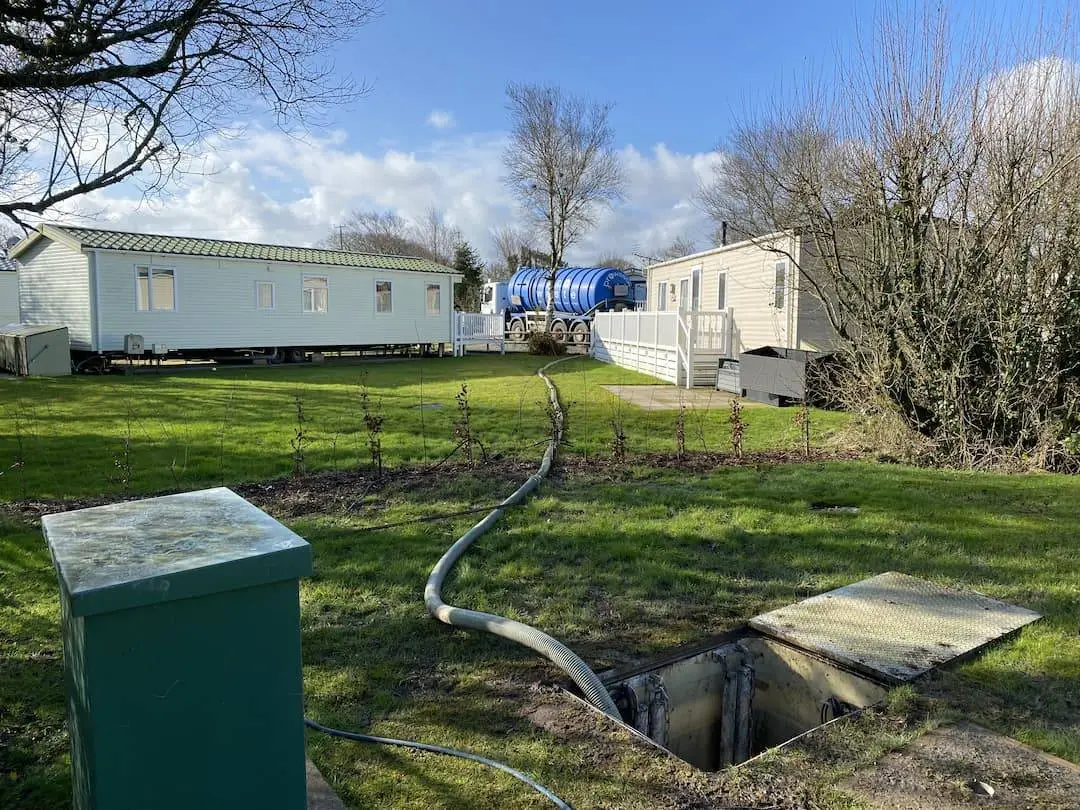
A slow kitchen drain does not automatically mean that a septic tank is full. Neither does an occasional smell near a terrace drain. When both symptoms appear repeatedly, however, the property’s drainage line, ventilation and septic system need checking rather than guesswork.
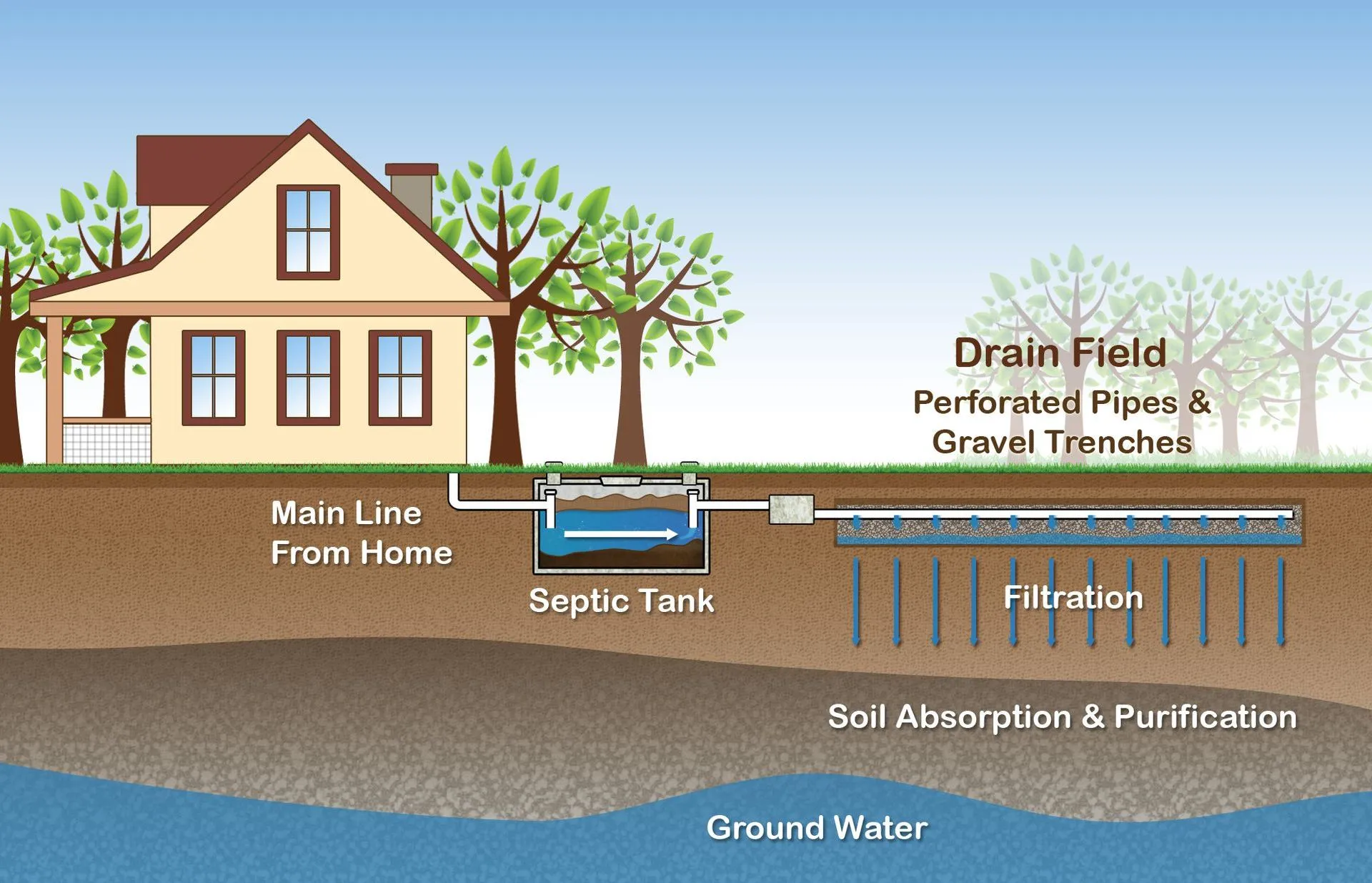
That situation is familiar in older homes around Zemst, including Elewijt, Weerde, Hofstade and the more rural parts of the municipality. Some properties connect directly to public sewerage. Others use a septische put, or fosse septique, as part of their wastewater system. A smaller number may require an individual biological treatment installation, known as an IBA.
The distinction matters. These systems do different jobs and carry different maintenance obligations.
This guide uses a representative Elewijt farmhouse scenario to explain what homeowners should check before arranging septic tank emptying in Zemst. It is based on Flemish technical guidance and common service conditions. It is not presented as the record of one individual DrainResQ visit.
An Older Elewijt Home With No Septic Maintenance Record
Consider a farmhouse built during the 1970s in Elewijt (postcode 1982). Five people live at the property. The owners know that a concrete tank is buried near the driveway, but they do not know its exact configuration, when it was last emptied or whether all household wastewater passes through it.
The first noticeable symptom is a kitchen drain that has become progressively slower. Several weeks later, a sewage-like smell appears near the terrace during warmer afternoons.
Those symptoms justify an inspection, but they do not prove that the tank is full.
A slow kitchen drain can result from fat, food residue or a restriction within the kitchen branch pipe. Odour can come from poor ventilation, an empty water trap, a defective pipe connection or the septic system itself. Emptying a tank without checking the wider drainage arrangement can therefore leave the original problem unresolved.
Before booking, the homeowner should establish four basic facts:
- Where is the tank lid?
- What is the approximate tank capacity?
- Does the tank receive toilet wastewater only, or both black and grey wastewater?
- When was it last inspected or emptied?
Missing paperwork is common in older properties. A private-water drainage inspection certificate is not automatically required for every Belgian property sale, so a buyer may receive little useful information about the buried system. The absence of a keuringsattest does not prove non-compliance, but it means the new owner needs to establish a maintenance baseline.
Check the Zoneringsplan Before Assuming What the Property Uses
Wastewater obligations in Flanders are determined address by address. A property’s appearance, construction year or distance from a town centre does not reliably tell you whether it is connected to sewerage.
Use the VMM geoloket for zoning and implementation plans to check the address.
The map distinguishes between categories including:
- Centraal gebied: public sewerage and collective treatment are available.
- Collectief geoptimaliseerd buitengebied: sewerage is available and connected to treatment.
- Collectief te optimaliseren buitengebied: collective sewerage is planned or still needs optimisation.
- Individueel te optimaliseren buitengebied: the property generally requires individual wastewater treatment, usually an IBA.
The colour shown on the map is only the starting point. Local rules and the property’s actual pipe arrangement still need checking. The VMM states that whether a septic tank is required depends on both the zoning classification and the rules applied by the municipality or sewer-network operator.
A property in the individually optimised zone should not assume that an ordinary septic tank satisfies the treatment requirement. An IBA actively treats wastewater. A septic tank primarily separates and partially breaks down solids before the effluent moves onward. They are not interchangeable.
Septic Tank Sizing Depends on What Enters the Tank
The correct tank volume depends partly on whether the installation handles toilet wastewater only or all domestic wastewater.
According to the VMM guidance on septic-tank type and sizing:
For toilet wastewater only:
- Minimum volume: 2,000 litres
- Recommended capacity: 300 litres per population equivalent up to 10
- 225 litres per additional population equivalent from the eleventh onward
For black and grey wastewater:
- Minimum volume: 3,000 litres
- Recommended capacity: 600 litres per population equivalent up to 10
- 450 litres per additional population equivalent from the eleventh onward
A 3,000-litre tank may therefore be appropriately sized for five residents when it receives all household wastewater. The same number alone does not confirm that the installation is correct. Chamber design, inlet and outlet arrangement, ventilation, structural condition and zoning status also matter.
Older single-compartment tanks usually retain and separate material less effectively than modern multi-compartment systems. They may need more frequent attention, but no responsible operator should calculate an exact interval from construction year alone.
When Should a Septic Tank Be Emptied?
There is no useful universal answer such as “every year” or “every four years.”
The VLARIO technical guidance recommends emptying a septic tank when it is more than approximately 70% filled with septic material. That is a technical maintenance benchmark, not a fixed calendar interval.
How quickly a tank reaches that point depends on:
- Tank capacity
- Number of occupants
- Whether grey wastewater enters the tank
- Number and layout of compartments
- Water usage
- Materials flushed into the system
- Biological activity inside the tank
- Infiltration caused by damaged covers, pipes or tank walls
The last point is important. A high groundwater table should not normally fill a watertight septic tank. Unexpected water entering the tank may indicate a crack, defective joint, damaged access cover or another infiltration route. Pumping the tank treats the immediate volume, not the defect allowing groundwater to enter.
The best maintenance interval is established through actual observations. Record the date, measured sludge level, approximate volume removed and household occupancy after each service. The second documented inspection is usually far more useful than an online calculator.
Signs That Require an Inspection
A full or poorly functioning tank can produce several symptoms, but each has other possible causes.
Several drains have slowed down
One slow sink usually points to a local pipe restriction. Several slow fixtures, especially toilets and ground-floor drains, suggest a problem farther along the drainage system.
Pipes gurgle after flushing
Gurgling can indicate restricted flow or poor ventilation. It does not identify the exact location of the problem.
Odour appears near the tank or outdoor drains
Persistent odour may result from an overloaded tank, damaged cover, ventilation defect or a dry drain trap.
Wastewater pools near the tank or outlet
Stop unnecessary water use and arrange an inspection. Do not open the tank or attempt to enter it. Gases formed inside enclosed wastewater tanks can be fatal.
The drainage problem returns after unblocking
A recurring blockage may require a CCTV drain inspection rather than another blind attempt to clear the pipe.
What Happens During Septic Tank Emptying?
The first practical issue is access.
A vacuum tanker does not need to park directly beside every tank, but hose distance, elevation and the route between the vehicle and the lid affect the work. Rural driveways may also have low branches, narrow gates, soft verges, weak paving or no safe turning space.
DrainResQ should confirm access using the dimensions and weight of the vehicle assigned to the job. Generic internet claims about a “standard” truck width are not reliable enough for booking.
When requesting service, provide:
- Full address and postcode
- Photograph of the driveway entrance
- Photograph of the tank lid and surrounding area
- Estimated distance from the parking position to the tank
- Gate width and overhead restrictions
- Whether the lane is shared
- Whether the lid is exposed, buried or paved over
- Tank capacity, when known
- Description of the symptoms
- Whether several drains are affected
A properly scoped visit normally involves:
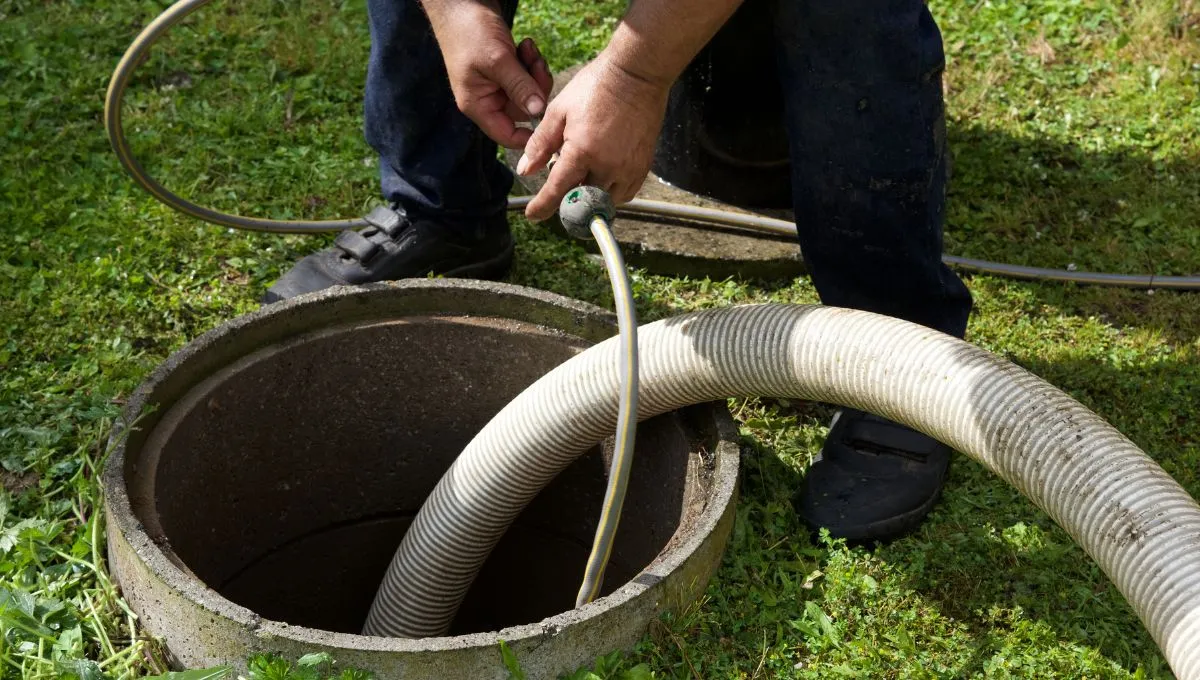
- Locating and safely opening the access point
The technician checks that the lid can be reached without damaging paving, planting or nearby structures. - Assessing the tank before pumping
Where practical, the operator observes liquid and accumulated material before disturbing the contents. - Removing the contents with vacuum equipment
The amount removed depends on the tank, retained material and service scope. It should not be invented in advance from nominal tank capacity. - Checking accessible components
The technician may inspect visible inlet and outlet components, chamber walls, baffles and signs of root entry or structural deterioration. - Closing the tank securely
The cover must be returned to a safe condition. - Recording the service
The homeowner should retain the date, invoice, service description and any structural observations.
Emptying is not the same as repairing a cracked tank, replacing a failed baffle or clearing a blocked household pipe. Any separate defect should be identified and quoted as separate work.
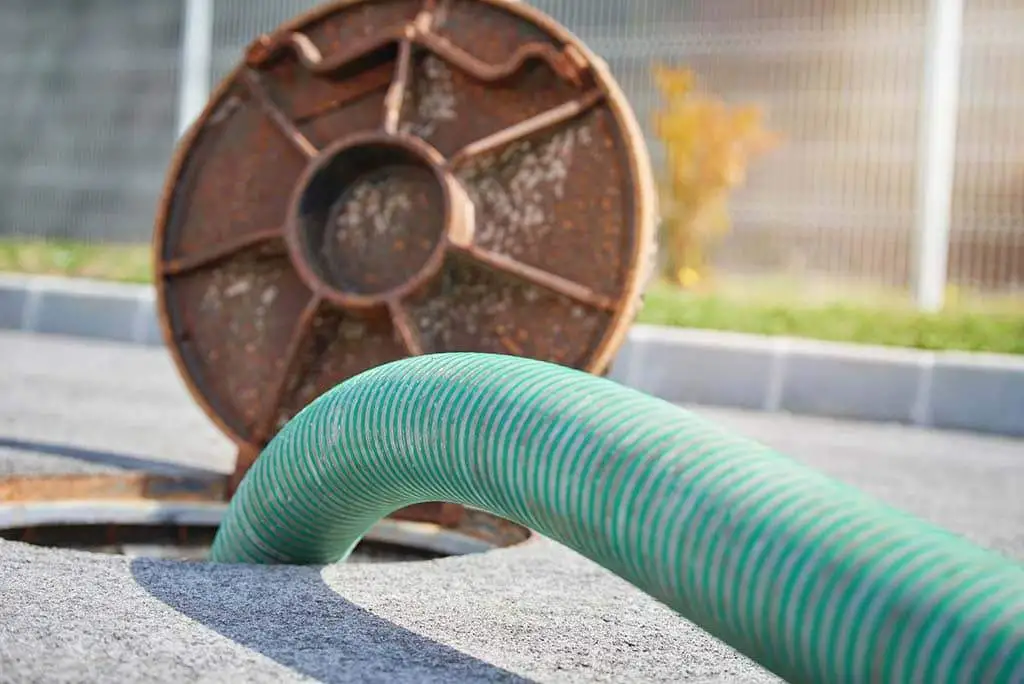
Where Does the Septic Waste Go?
VLARIO states that septic material should be transported to a public wastewater treatment installation.
Waste transport in Flanders is governed by OVAM requirements. In general, waste transports require an identification form, and businesses arranging collection or transport may need the appropriate registration. The operator—not the homeowner—normally manages the transport documentation and delivery process.
The homeowner should still ask for:
- An itemised service invoice
- Confirmation of what was removed
- The service date and address
- The operator’s business details
- Confirmation that the waste entered the authorised treatment route
- Any inspection observations or maintenance recommendation
Do not describe an ordinary service receipt as a statutory waste-transfer certificate unless it actually is one. OVAM’s identification-form guidance explains the formal transport-document system.
What Does Septic Tank Emptying Cost in Zemst?
There is no defensible fixed Zemst price without the tank and access details.
The quote can change according to:
- Tank capacity
- Estimated volume to remove
- Distance between the truck and the tank
- Lid accessibility
- Difficult or unsafe vehicle access
- Additional drain cleaning or inspection
- Emergency, evening or weekend attendance
- Disposal and transport arrangements
- Applicable VAT treatment
DrainResQ states the expected price before work starts. When requesting a quote, ask what the price includes rather than comparing only the headline amount.
The written quote should confirm:
- Call-out or transport charge
- Included pumping volume
- Charge for additional volume, if applicable
- Included hose distance
- Access surcharges
- Emergency surcharge
- Additional inspection or unblocking charges
- VAT rate
- Total including VAT
Does 6% or 21% VAT Apply?
Belgium’s standard VAT rate is 21%. A reduced 6% rate can apply to qualifying renovation, repair or maintenance work on private homes that meet the age and use conditions stated by FOD Financiën.
That does not mean every septic-pumping invoice automatically qualifies for 6%.
The VAT treatment can depend on the work performed and how it is classified. Pumping, cleaning, unclogging and repair may not necessarily be treated as the same service. Ask the contractor to confirm the applicable rate in writing and show it clearly on the itemised quote and invoice.
Do not accept an unsupported promise that all septic emptying receives 6% VAT. Do not assume that a 21% invoice is automatically wrong either.
Practical Considerations Across Zemst
DrainResQ serves the municipality across postcodes 1980, 1981 and 1982, including Zemst, Eppegem, Hofstade, Elewijt and Weerde.
Property conditions vary too much to make blanket claims about which village is sewered or unsewered. Check the individual address rather than relying on a general description of the neighbourhood.
Several local booking issues are still worth anticipating:
Shared access
Tell neighbours before the appointment when the truck must use a shared lane, gate or turning area. The vehicle cannot block access without prior agreement.
Soft ground
Wet verges and unreinforced driveways may not support a heavy tanker. Send photographs before the visit and keep the vehicle on suitable hardstanding.
Buried covers
A tank lid covered by soil, gravel, decking or paving adds avoidable time. Locate and expose the access point safely before arrival unless DrainResQ has agreed to do so.
Language
Use whichever term you know when booking: septische put legen, vidange fosse septique or septic tank emptying. More important details are the address, tank location, symptoms and access conditions.
Seasonal timing
Do not wait for a preferred season when wastewater is backing up or pooling. For planned maintenance, choose a date when the access route is firm and the tank lid is easy to reach.
What to Record After the Visit
The useful result is not merely an empty tank. It is a documented starting point for future maintenance.
Keep a record containing:
- Service date
- Tank capacity, when confirmed
- Tank type and number of compartments
- Household occupancy
- Observed sludge or fill condition
- Volume removed, when measured
- Structural observations
- Recommended inspection date
- Invoice and VAT breakdown
Avoid turning the recommendation into a permanent calendar rule. Occupancy changes. Tanks deteriorate. Pipe connections are altered. The next interval should be adjusted using what the technician actually finds.
Also keep wet wipes, cooking fats, sanitary products and aggressive drain chemicals out of the system. A septic tank depends on biological activity, and it is not designed to receive materials that do not break down.
Frequently Asked Questions
How often should a septic tank be emptied in Zemst?
Check the accumulated septic material rather than following a fixed calendar. VLARIO recommends emptying when the tank is more than approximately 70% filled with septic material. Tank size, occupancy, wastewater inputs and chamber design determine how quickly that point is reached, so record each inspection and service date.
What are the signs that a septic tank may need emptying?
Several slow drains, gurgling pipes, persistent sewage odour, wastewater pooling or drainage problems affecting multiple fixtures justify an inspection. These symptoms can also result from blocked pipes, ventilation defects or structural damage. Check the drainage system instead of assuming that pumping alone will solve the problem.
Is septic tank emptying legally required at a fixed interval?
Flemish technical guidance does not use one universal household pumping interval. The practical requirement depends on the system, its condition and the property’s wastewater obligations. VLARIO recommends pumping above roughly 70% septic-material fill. The address’s zoneringsplan and local sewer rules determine which treatment arrangement is required.
How do I check whether my Zemst property uses sewerage, a septic tank or an IBA?
Enter the address in the VMM zoning and implementation-plan geoloket. It shows the wastewater objective assigned to the property. Then compare the map with the actual installation and confirm unclear cases with the municipal sewer-network operator. A septic tank and an IBA perform different functions.
What VAT rate applies to septic tank emptying in Belgium?
The standard Belgian VAT rate is 21%. A reduced 6% rate can apply to certain qualifying work on private homes more than ten years old, but septic pumping does not automatically receive that rate in every situation. Request an itemised quote showing how each service and VAT rate is classified.
Can a vacuum tanker reach a narrow rural driveway in Zemst?
Access depends on the specific tanker, gate width, overhead clearance, turning space, ground strength and hose distance. Send photographs and measurements before the appointment. Do not rely on a generic minimum-width figure. DrainResQ can confirm whether the assigned vehicle can approach safely or must remain farther from the tank.
Book Septic Tank Emptying in Zemst
For a quote, send DrainResQ the property address, tank location, approximate capacity, access photographs and a brief description of the symptoms.
DrainResQ covers Zemst, Eppegem, Hofstade, Elewijt, Weerde and surrounding areas across postcodes 1980, 1981 and 1982.
View septic tank emptying services
View the Zemst service area
Call: +32 467 76 16 72
Email: service@drainresq.be