When a drain blocks, most homeowners ask the same question: what is the best way to clear it?
The two most common professional methods are traditional drain snaking and high-pressure drain jetting. Both can restore flow. Both are legitimate drainage solutions. But they do not do the same job.
A drain snake is usually used to break through or remove a local blockage. High-pressure jetting goes further by cleaning buildup from the inside of the pipe. That difference matters. In some cases, snaking is the right first step. In others, it gives temporary relief while the real cause of the blockage stays in place.
This guide explains how both methods work, what kind of blockage each one handles best, and when one method is likely to give a better long-term result than the other. If you are dealing with a recurring blockage in Brussels, Anderlecht, Ixelles, Zaventem, or nearby areas, understanding that difference can save you from repeat call-outs and wasted money.
How Drain Snaking Works
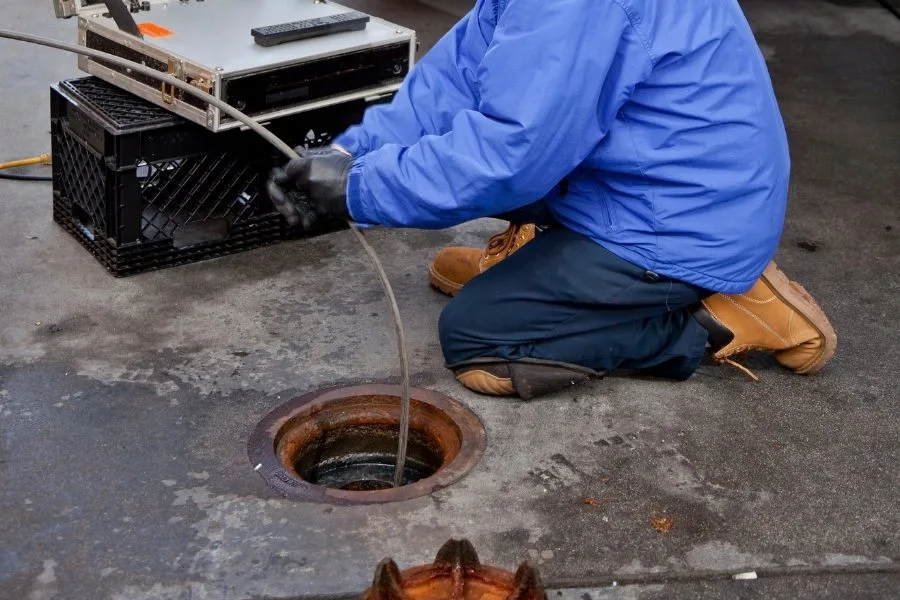
A drain snake, also called a drain auger, is a flexible cable with a cutting or grabbing head at the end. The cable is fed into the drain until it reaches the obstruction. The technician then rotates the cable to break up the blockage, hook it, or push through it enough to restore flow.
This method is often effective for:
- local hair blockages
- compact debris near the drain entry
- soft toilet clogs
- small obstructions in short branch lines
For a first-time blockage in a single fixture, snaking is often the quickest and most cost-effective solution. You can read more about drain unblocking options available in Brussels to understand what a professional assessment typically involves.
What Snaking Does Well
Snaking is useful because it is direct. If the problem is close to the drain opening or limited to one area, the cable can often clear it quickly without a more involved cleaning process.
It is often a good fit when:
- the blockage is recent
- the drain has no history of recurring problems
- only one fixture is affected
- the likely cause is hair, paper, or a local obstruction
This is why snaking is commonly used for blocked toilets, shower drains, and some bathroom sink problems.
The Main Limitation of Snaking
Snaking restores flow, but it does not usually clean the pipe wall.
That is the key limitation.
If the blockage was caused by a layer of grease, soap residue, sludge, or scale lining the inside of the pipe, the snake may open a path through the middle of that buildup while leaving the surrounding layer in place. Water starts flowing again, but the surface that caused the problem is still there. New debris catches on it faster, and the drain may start slowing down again.
That is why some drains work well after snaking, then block again weeks or months later. If this pattern sounds familiar, the warning signs of a serious drain problem are worth reviewing before the situation worsens.
How High-Pressure Drain Jetting Works
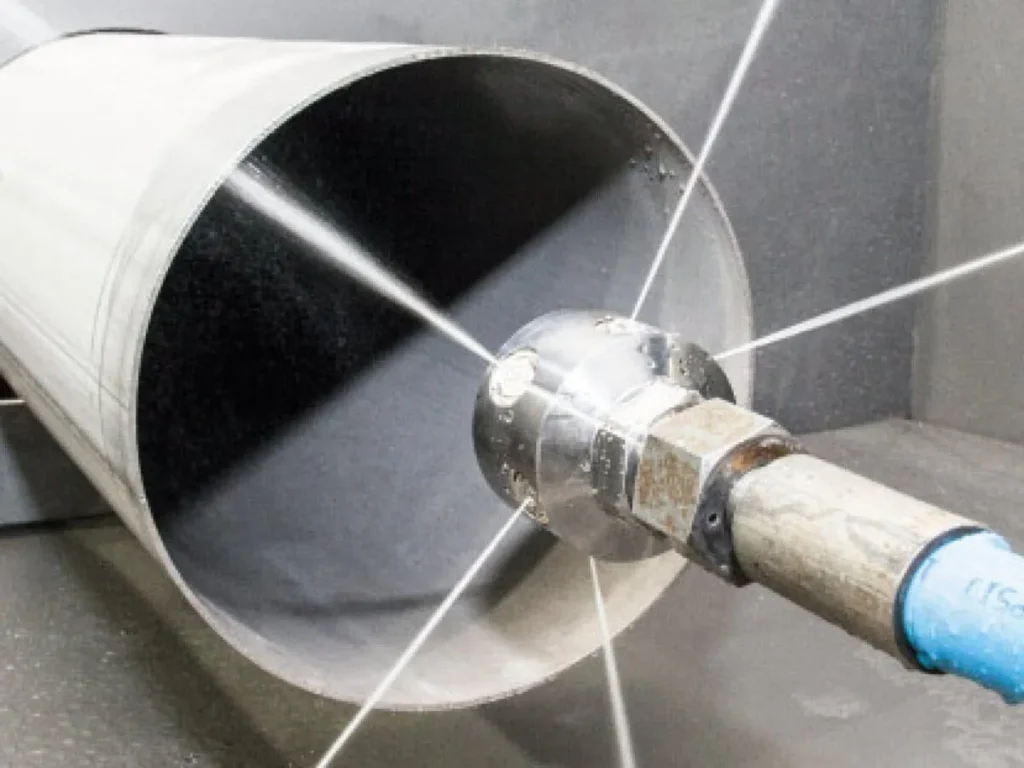
High-pressure drain jetting uses a specialist hose and nozzle to send pressurised water through the drain. The forward-facing water helps break through the obstruction, while the rear-facing jets help pull the hose forward and clean the pipe wall as it moves through the line.
Unlike snaking, jetting does not just create an opening through the blockage. It removes buildup from a larger section of the pipe interior.
This makes it particularly useful for:
- grease buildup in kitchen drains
- sludge and residue in shared lines
- recurring blockages
- scale and general wall buildup
- larger or more established drain restrictions
If the drain problem keeps coming back, this is often the method that makes the bigger difference. For kitchen-specific issues, our guide on unclogging a kitchen drain in Brussels covers when jetting becomes the more appropriate choice over DIY methods.
What Jetting Does Better Than Snaking
The biggest advantage of high-pressure jetting is that it treats the cause, not just the immediate obstruction.
It is especially effective when the problem is not one object stuck in the line, but a narrowing caused by buildup over time.
Jetting is often the better option when:
- the same drain blocks repeatedly
- the issue involves grease or sludge
- several fixtures are affected
- the pipe needs a deeper internal clean
- the blockage is farther down the system
Because the pipe wall is cleaned more thoroughly, the result often lasts longer than a basic snaking job.
Is High-Pressure Jetting Always Better?
No.
Jetting is not automatically the right choice for every drain problem. It depends on the pipe condition, the type of blockage, and the history of the line.
For example:
- a first-time toilet blockage may not need jetting
- a simple hair clog in a shower trap may be better handled mechanically
- a fragile or damaged pipe may need inspection before any jetting is considered
This is why method choice matters. The right question is not “which method is best in general?” The right question is “which method fits this blockage and this pipe?”
Drain Jetting vs. Snaking: Choose the Right Fix for Brussels Pipes
When a drain backs up in Brussels, finding a quick solution is always the priority—but picking the wrong tool can either waste money or leave your plumbing in worse shape. While a mechanical drain snake is excellent for clearing simple, localized blocks, older city pipes heavily lined with accumulated grease, scale, and mineral deposits require a much more thorough approach.
This drain jetting vs. snaking comparison guide breaks down exactly how each method handles stubborn blockages, helping you make an informed choice before calling in the heavy equipment.
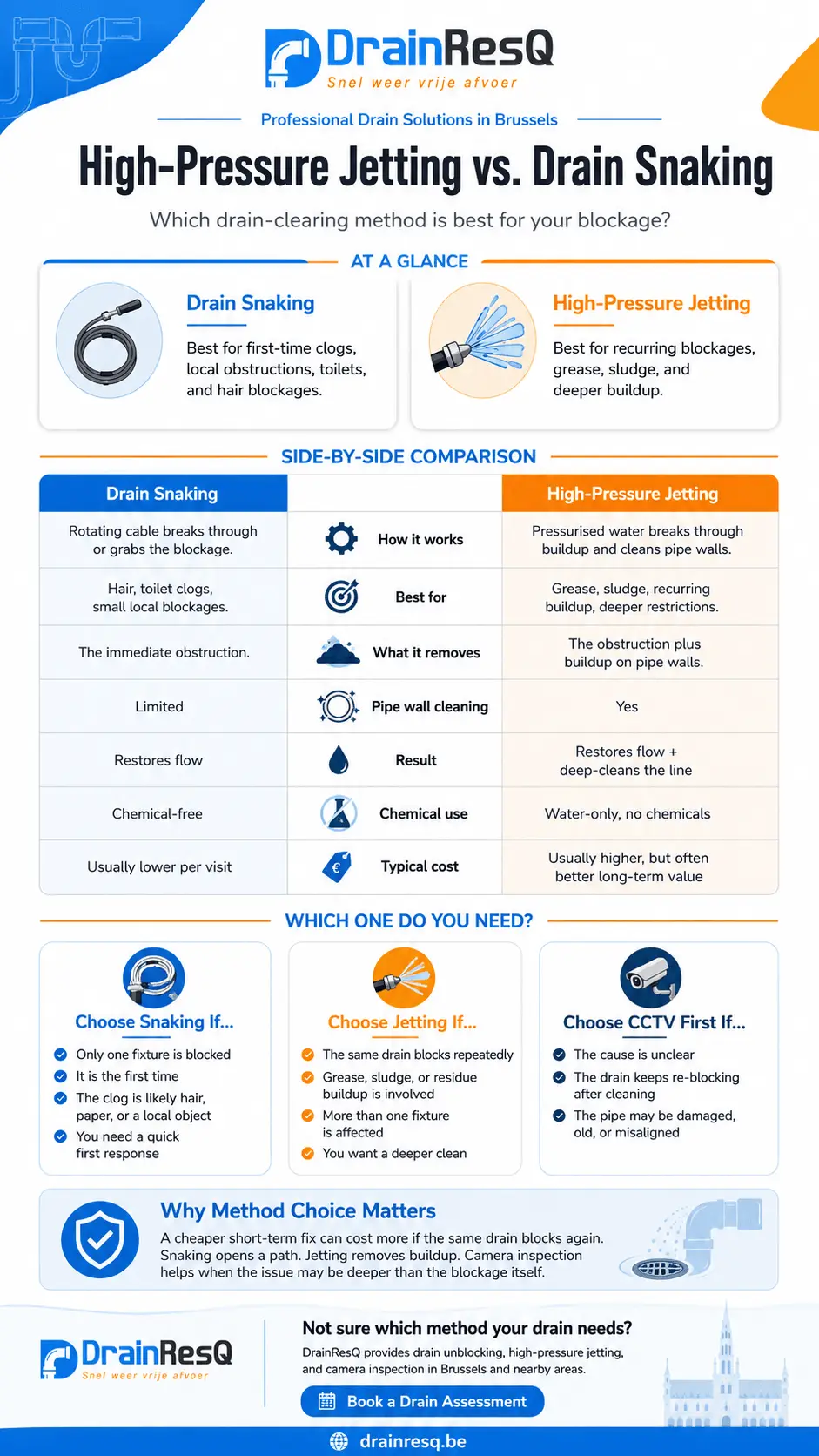
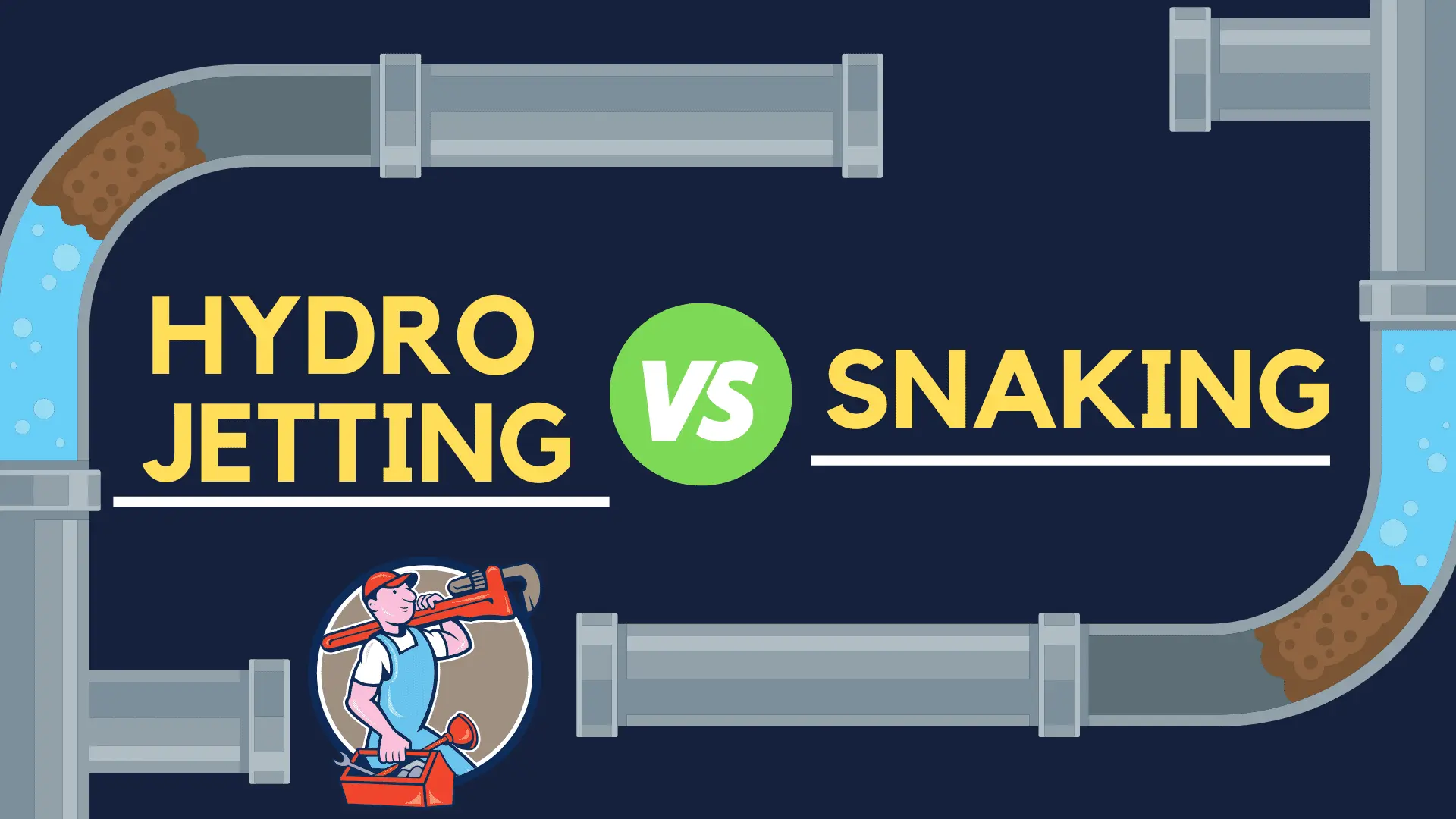
Deciding between high-pressure water jetting and traditional snaking comes down to whether you need a quick puncture or a complete system clear-out. By matching the method to the age and condition of your plumbing, you keep your lines clear and prevent repetitive, costly service calls. Use the drq-high-pressure-jetting-vs-drain-snaking-infographic comparison layout as your quick checklist to diagnose what your plumbing actually needs.
When a Camera Inspection Should Come First
If the drain has a history of recurring problems, the condition of the pipe may need to be checked before choosing a cleaning method.
A camera inspection can help show whether the issue is caused by:
- recurring buildup
- a damaged section of pipe
- a displaced joint
- root intrusion
- standing water in a sagging section
- a restriction deeper in the system
That matters because no cleaning method can fix a structural defect. If the real issue is the condition of the pipe, repeated snaking or jetting alone will not solve it properly. Understanding when to hire a professional for a clogged drain can help you avoid repeated call-outs for a problem that needs a proper structural assessment.
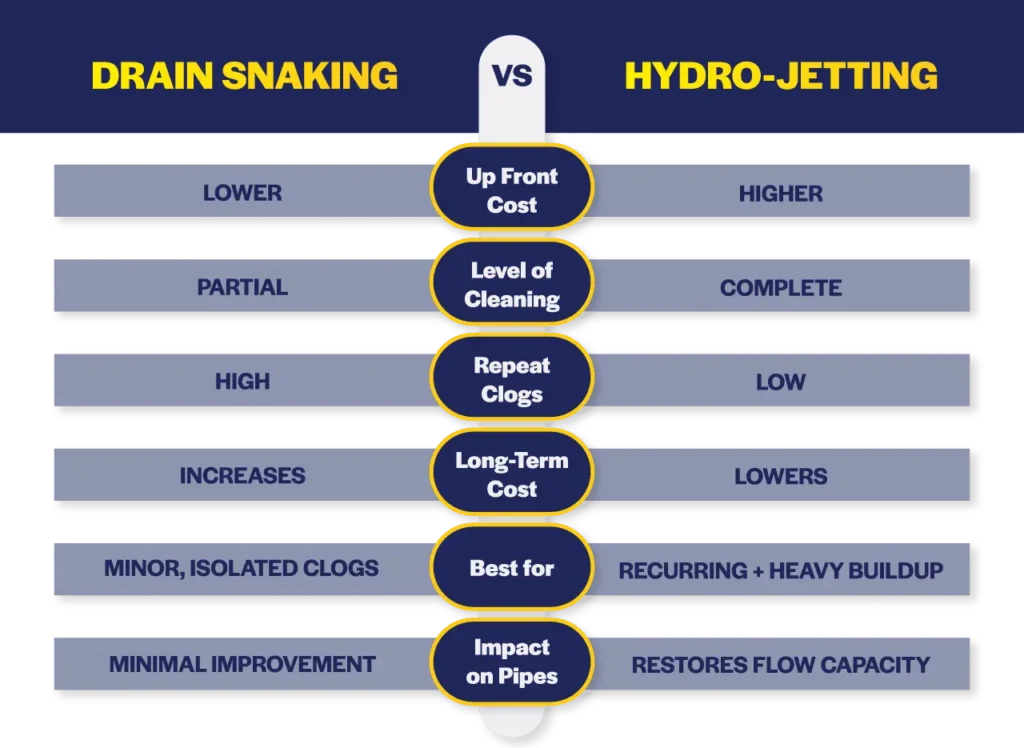
Drain Jetting vs Snaking: Direct Comparison
| Factor | Drain Snaking | High-Pressure Jetting |
| Main method | Rotating cable breaks through or grabs blockage | Pressurised water breaks through and cleans pipe interior |
| Best for | Localised blockages, hair, toilet clogs, first-time issues | Grease, sludge, recurring buildup, deeper restrictions |
| Pipe wall cleaning | Limited | Yes |
| Result type | Restores flow | Restores flow and removes buildup |
| Recurring blockages | Often temporary if residue remains | Usually better for long-term improvement |
| Cost per visit | Usually lower | Usually higher |
| Best used when | One fixture is affected and blockage is local | Problem keeps returning or affects larger sections |
If cost is a factor in your decision, the drain unblocking cost guide for Brussels explains what affects pricing for both methods and what a professional visit typically involves.
Which Method Is Right for Your Drain?
Here is the practical version.
Choose Snaking When:
- the blockage is local and recent
- only one fixture is affected
- the issue is likely hair, paper, or a small obstruction
- the drain has no recurring history
- you need a quick first response to an isolated clog
Choose Jetting When:
- the same drain blocks repeatedly
- the issue involves grease, sludge, or residue buildup
- multiple drains are affected
- the blockage is deeper in the system
- the goal is to clean the line, not just reopen it
For kitchen drains specifically, understanding the most common causes of kitchen sink drain blockages can help you decide which method is likely to resolve the issue properly rather than mask it.
Choose Camera Inspection First When:
- the drain keeps blocking even after professional clearing
- the cause is unclear
- the pipe may be old, damaged, or misaligned
- you want to avoid guesswork before repair or cleaning
Why This Matters in Brussels Properties
In Brussels, many drainage problems are not limited to one clean, simple clog. Older buildings, apartment layouts, shared drain lines, and mixed-use properties can all make the real cause harder to judge from symptoms alone.
That is why repeated drain problems should not be treated the same way as a one-off blockage.
A first-time clog in one bathroom basin is different from a kitchen line that blocks every few months, or a shared line where several fixtures start draining slowly at once. In those cases, choosing the wrong method often means paying twice for the same problem.
DrainResQ operates across Brussels and the surrounding area, including Anderlecht,Schaarbeek,Ixelles,Zaventem, and Uccle. If you are not sure which method your drain needs, a professional assessment is the safest next step.
Which Method Lasts Longer?
In general, jetting often lasts longer than snaking because it removes more of the buildup from the pipe wall.
Snaking can still be the correct method for the right blockage. But if the line is heavily coated with grease, soap residue, sludge, or scale, a cable opening through the centre of the restriction is rarely the full answer.
That is why recurring blockages often shift from snaking to jetting once the pattern becomes clear. Seasonal drain maintenance can also reduce how often either method is needed by keeping buildup from accumulating in the first place.
FAQ
Is snaking enough for a blocked kitchen drain?
Sometimes, yes. But if the blockage is caused by grease buildup rather than one local obstruction, snaking may only provide short-term relief. If the same kitchen drain has blocked before, high-pressure jetting is likely the more effective solution.
Is high-pressure jetting safe for older pipes?
It can be, but pipe condition matters. If there is any doubt about the state of the line, a camera inspection is the safer place to start.
Does jetting use chemicals?
No. High-pressure jetting uses water only.
Which method is better for a blocked toilet?
For a first-time toilet blockage with no recurring history, snaking is often the better first response. If the same toilet blocks repeatedly or multiple fixtures are involved, a deeper issue may need inspection or jetting.
Why does my drain block again after snaking?
Because the blockage may not have been fully removed from the pipe wall. The snake may have reopened the line without eliminating the residue that keeps catching new debris. This is one of the warning signs that a drain problem is more serious than it first appeared.
Should I choose the cheaper method first?
Not always. A cheaper method that only provides temporary relief can end up costing more if the same drain needs repeated visits. The drain unblocking cost guide explains how to weigh short-term and long-term costs.
The Right Method Makes the Difference
Drain snaking and high-pressure jetting are not interchangeable. They solve different problems.
Snaking is often the right choice for a first-time, localised blockage. High-pressure jetting is often the better choice when the drain has recurring buildup, grease, sludge, or a history of repeated restriction. And when the condition of the pipe is uncertain, camera inspection should come before either method is pushed too far.
At DrainResQ, we provide drain unblocking, high-pressure jetting, and camera inspection across Brussels and surrounding areas.
If you are not sure which method your drain needs, the safest next step is a professional assessment.
Book a drain assessment with DrainResQ before a recurring blockage turns into the same expensive problem again.