
If you own a property in the Flemish municipalities around Brussels — such as Vilvoorde, Grimbergen, Zemst, Meise, Zaventem, or nearby parts of Flemish Brabant — septic tank rules can affect what your property needs, how wastewater is discharged, and when maintenance is required.
This guide applies to Flanders, not properties inside the Brussels-Capital Region. If your home is in a Flemish municipality near Brussels, your obligations depend mainly on your zoning plan, your local sewer operator, and how your wastewater system is connected. VMM states that whether a septic tank must be installed depends on both the zoning-plan classification and the local rules of the municipality.
At DrainResQ, we help Brussels-area homeowners with septic tank emptying, drain inspection, and wastewater system checks. This guide explains the rules in practical terms so you know what to check before booking service or making property decisions.
Quick Answer: What Should Homeowners Check First?
| Question | Why It Matters |
| Is the property in Flanders or Brussels-Capital? | Flemish septic tank rules apply to Flemish municipalities, not Brussels-Capital itself. |
| What zone is the property in? | The zoning plan affects whether you connect to sewerage, use a septic tank, or need individual treatment. |
| What does the local sewer operator require? | Municipalities and sewer operators can impose local technical requirements. |
| Does the tank receive black water only or black + grey water? | This affects sizing and maintenance needs. |
| When was the tank last emptied or checked? | Sludge buildup determines whether the tank still functions properly. |
What Is a Septic Tank?
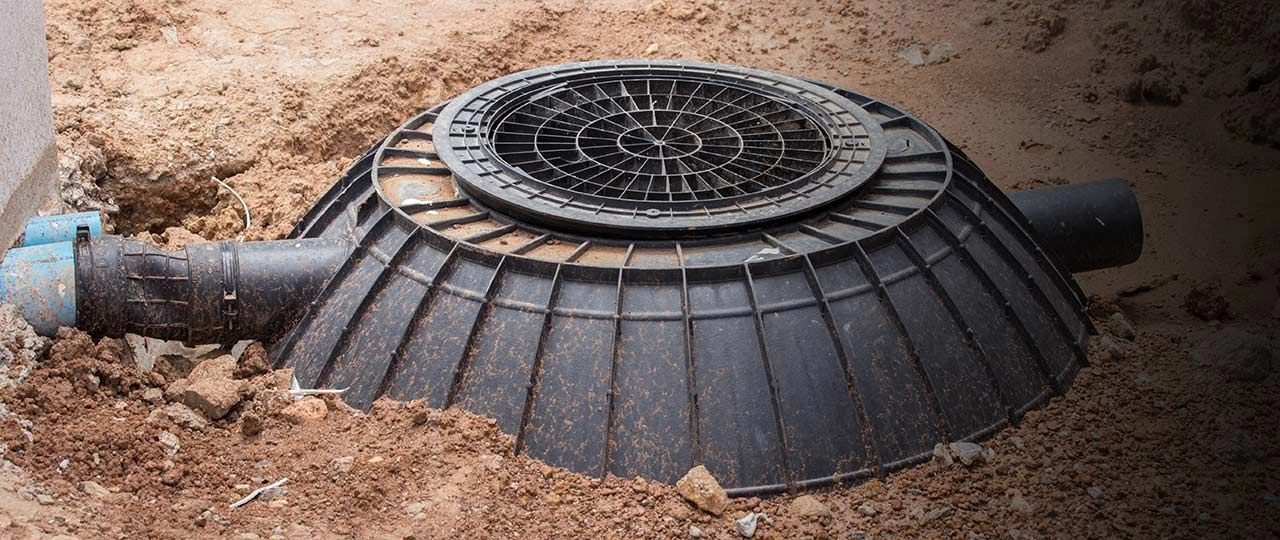
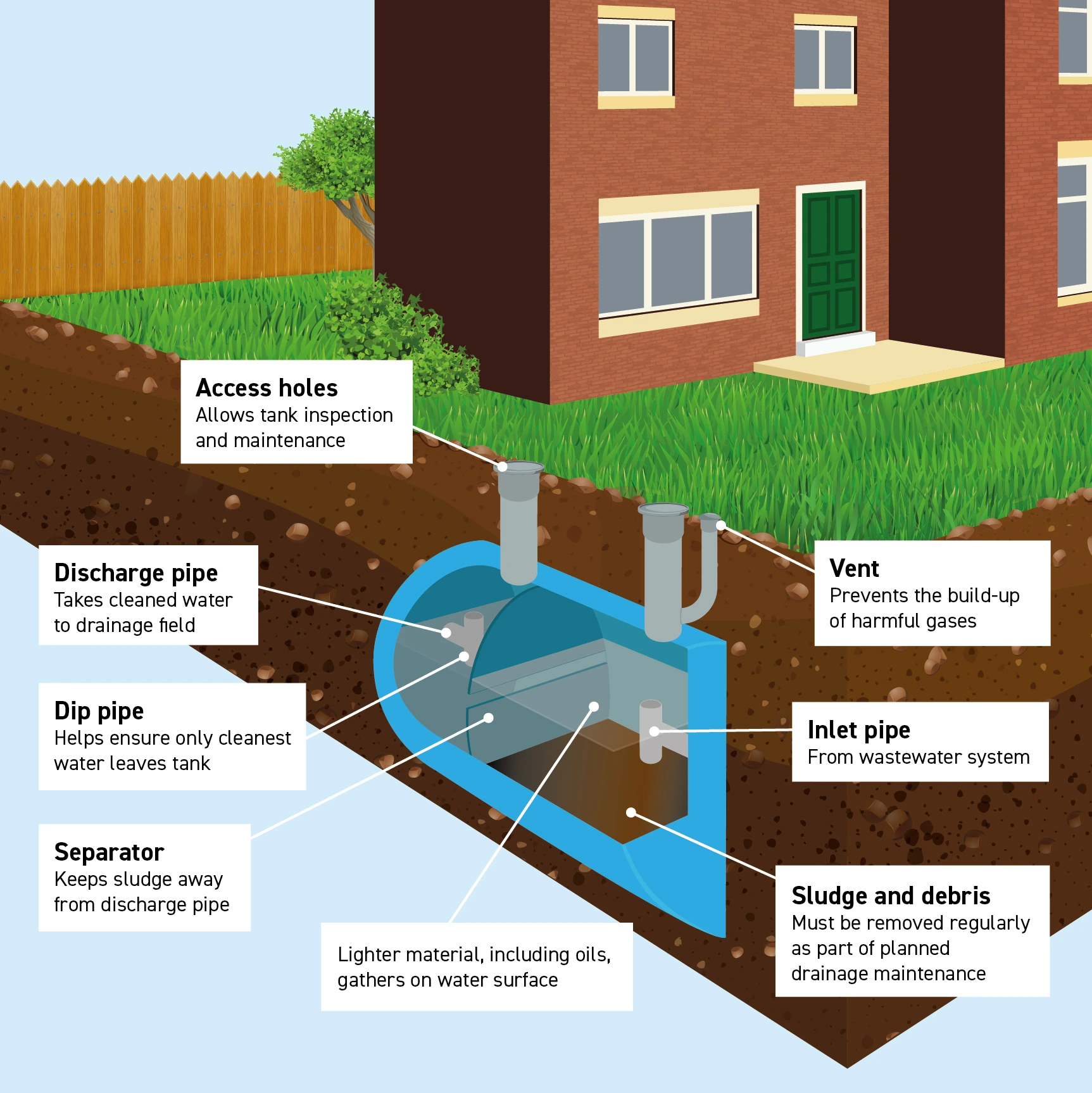
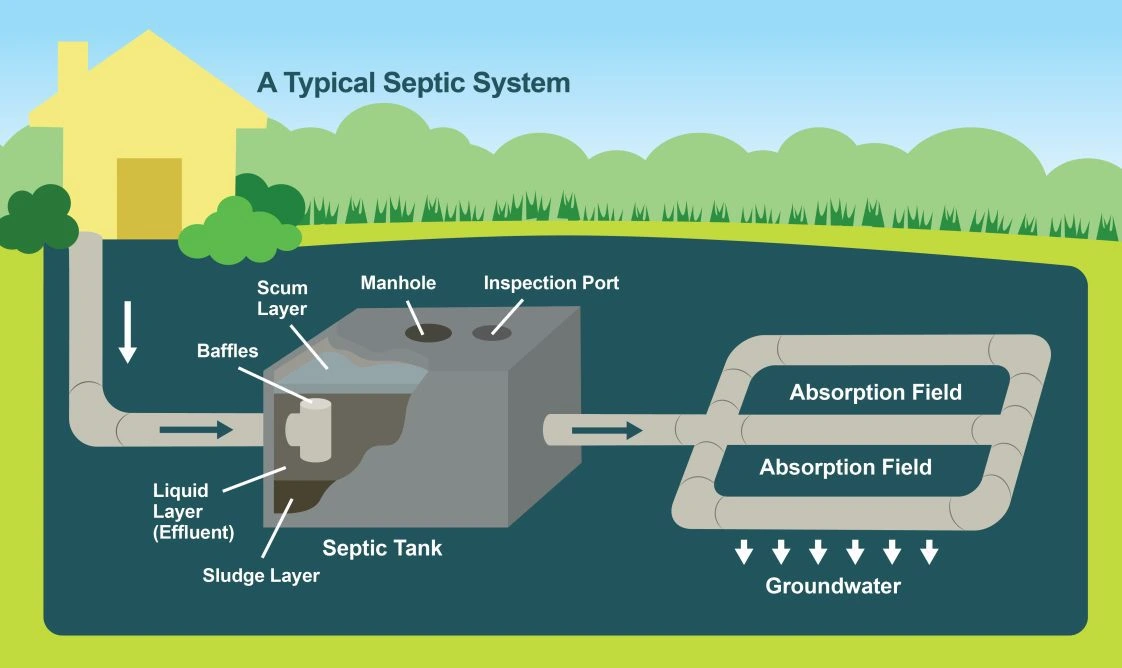
A septic tank, or septische put, is an underground chamber that pre-treats household wastewater. Solids settle at the bottom, lighter material can form a floating layer, and liquid wastewater flows onward through an outlet. Pidpa explains that a septic tank allows solids to sink and that bacteria help break down the contents before wastewater continues through the system.
A septic tank is not the same as a simple storage pit. VMM distinguishes septic tanks from cesspits or beerputten, which mainly store waste and do not function in the same way as a septic tank with compartments and an overflow.
Why Flanders Regulates Septic Tanks
Septic tanks affect wastewater quality. If they are undersized, badly connected, poorly maintained, or discharging incorrectly, they can contribute to untreated wastewater entering the environment.
VLAREM is the Flemish environmental permitting framework. The Flemish Government explains that VLAREM II contains general and sectoral environmental conditions intended to prevent or limit nuisance, pollution, and safety risks.
For homeowners, the practical point is simple: septic tanks are not just a private plumbing feature. They are part of the wastewater system, and the legal and technical requirements depend on where the property is located and how it is connected.
Is a Septic Tank Required at Your Property?
There is no one-size-fits-all answer. In Flanders, VMM says the requirement depends on the zoning plan and local municipal rules.
Central Zone
In a central zone, sewer infrastructure is generally available and connected to wastewater treatment. VMM’s guidance indicates that a septic tank is preferably not used unless the municipality or sewer operator considers it necessary. If it is required, it is typically for black or faecal wastewater only, with a minimum volume of 2,000 litres.
Collective Optimisation Zone
In a collective optimisation zone, sewer infrastructure may be planned or not yet connected to treatment. VMM states that a septic tank can be required while awaiting connection to sewerage and wastewater treatment. In that case, it may need to receive both black and grey wastewater, with a minimum volume of 3,000 litres.
Individual Treatment Zone
In an individual treatment zone, public sewer connection may not be planned. VMM’s guidance says individual treatment can be required where wastewater must be treated on site.
How to Check Your Property
Do not guess based on the municipality name alone. Properties in Vilvoorde, Grimbergen, Zemst, Meise, and Zaventem can sit in different wastewater zones depending on the exact address.
Use the VMM zoning and implementation-plan tools, check your woningpas, or contact your municipal sewer operator. VMM says sewer information can be found through the Flemish sewer inventory and woningpas, and that homeowners can also ask the municipal sewer operator for more detail.
Local Sewer Operators Can Add Requirements
The zoning plan is not the only factor. Local sewer operators and municipalities can apply additional connection rules.
VLARIO notes that some sewer operators require a septic tank for faecal water and that homeowners should check whether the sewer operator has a technical connection regulation.
That means a neighbour’s setup is not proof that yours is compliant. The safest route is to check your address, your sewer operator’s rules, and any conditions attached to your building or renovation permit.
Septic Tank Size: What Capacity Is Needed?
Capacity depends on what enters the tank and how many people the system serves.
VMM’s public guidance gives minimum volumes by situation: 2,000 litres for black/faecal water only in cases where that setup is required, and 3,000 litres where both black and grey wastewater enter the tank while waiting for sewer connection and treatment.
VLARIO gives more detailed sizing guidance based on inwonersequivalenten. It lists a minimum of 2,000 litres for black water and a minimum of 3,000 litres for black + grey water, with larger sizing depending on the number of equivalent inhabitants.
For homeowners, the practical takeaway is this: do not assume the tank is correctly sized just because it has always been there. Older properties can have systems that no longer match household use, renovation changes, or current local requirements.
Rainwater Must Stay Out of the Septic Tank
Rainwater should not be connected to the septic tank. Pidpa warns that rainwater should not enter the septic tank because it can wash away bacteria and prevent proper biological functioning.
This also matters during inspections. Fluvius says a sewer inspection checks whether wastewater is correctly connected to sewerage, a septic tank, or an individual treatment installation, and whether wastewater and rainwater are correctly separated.
If you are renovating, selling, or reconnecting drainage, confirm that rainwater and wastewater are separated correctly.
How Often Should a Septic Tank Be Emptied in Flanders?
There is no single emptying interval that fits every tank. Be careful with blanket advice such as “every three to five years.” That may be a practical range for some households, but it is not a safe legal answer for every property.
The better trigger is tank condition. Pidpa advises contacting the cleaning service when solid matter rises above half of the tank.
Emptying frequency depends on:
- tank size
- household size
- whether the tank receives black water only or black + grey water
- water use
- solids entering the system
- whether the tank has been neglected previously
A professional septic tank emptying visit should not just remove waste. It should also help assess whether sludge levels, access, inlet and outlet condition, and general operation appear normal.
These checks can provide a better understanding of how the system is performing and whether maintenance is being carried out at suitable intervals. Homeowners who are unsure about timing can learn more about how often to empty a septic tank based on usage, tank size, and household needs.
Should the Tank Be Fully Emptied?
Do not assume “completely empty” is always the right goal. Pidpa explains that the tank should not be fully emptied and that around 20% should remain so the biological process can restart.
This is another reason to avoid DIY handling or unqualified service. Septic tank maintenance is not just pumping out liquid. It requires proper handling, disposal, and understanding of how the tank functions.
Who Should Empty a Septic Tank?
Septic sludge must be removed and processed correctly. Use a professional service that can confirm compliant disposal and provide the right service documentation.
For homeowners, the practical checklist is:
- use a professional septic tank emptying provider
- ask how the sludge will be transported and processed
- keep invoices and service records
- keep any disposal or transport documentation provided
- record the date of emptying and any technician notes
Do not attempt to empty or dispose of septic sludge yourself. Beyond the legal and environmental risks, septic tanks can create dangerous conditions due to gases and confined-space hazards.
What Happens After Emptying?
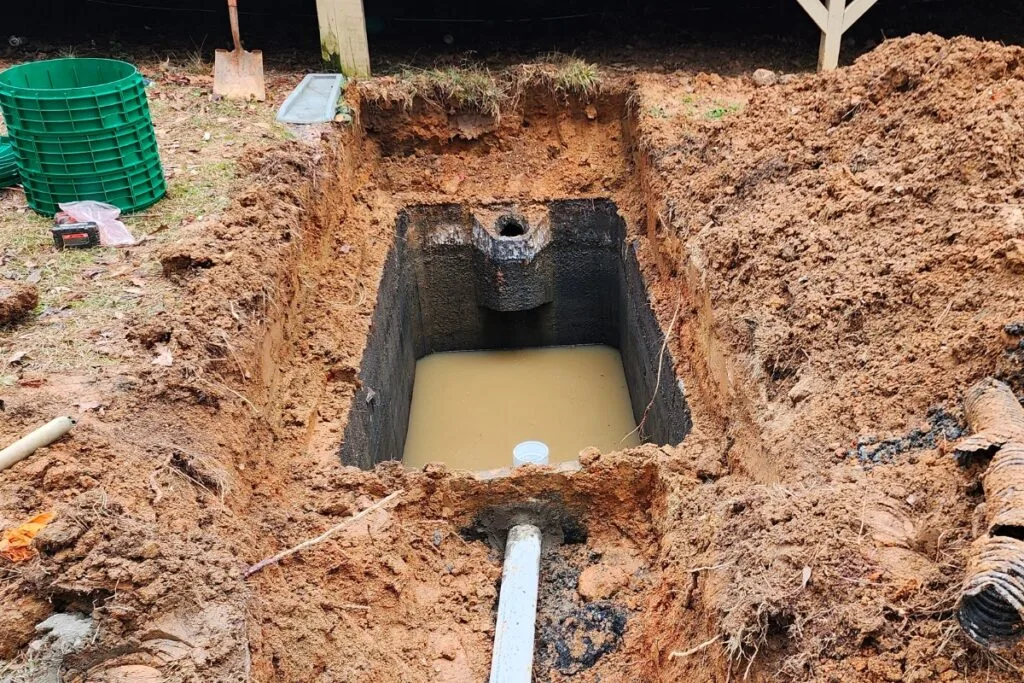
Emptying gives the technician a better view of the tank and connections. This is the right time to look for visible warning signs such as:
- damaged inlet or outlet pipes
- blocked outlet
- abnormal sludge levels
- cracked or weakened tank walls
- signs of root intrusion near connection points
- poor access or unsafe cover condition
If the issue appears to involve pipework rather than the tank itself, a camera inspection can help confirm the condition of the pipes leading into or out of the tank.
Buying or Selling a Property With a Septic Tank
There is no need to overstate this as a blanket legal requirement. But from a practical property perspective, septic tank records are useful.
If you are selling a property in Flemish Brabant, recent emptying records and inspection notes can reduce uncertainty for buyers. If you are buying, ask:
- where the tank is located
- when it was last emptied
- whether records exist
- what wastewater enters the tank
- whether the property is in a sewered, collective, or individual treatment zone
- whether rainwater and wastewater are correctly separated
If no one can answer those questions, book a service visit before small uncertainty becomes a negotiation problem.
What This Means for Brussels-Area Homeowners
For homeowners in Vilvoorde, Grimbergen, Zemst, Meise, Zaventem, and nearby Flemish Brabant municipalities, the key is not memorising every regulation. The key is checking the property-specific facts.
You need to know:
- your zoning-plan classification
- your sewer operator’s local rules
- whether your tank is required
- whether the tank is correctly connected
- whether rainwater is separated
- when the tank was last emptied
- whether the sludge level is under control
DrainResQ can help with the practical side: septic tank emptying, drainage inspection, and identifying whether further wastewater-system checks are needed.
FAQs About Septic Tank Regulations in Flanders
Is a septic tank compulsory in Flanders?
It depends on your location and local rules. VMM says the requirement depends on the zoning plan and municipal rules. Check the VMM tools, your woningpas, or your sewer operator for your exact address.
How often must a septic tank be emptied in Flanders?
There is no single interval for every tank. The practical trigger is sludge and solid buildup. Pidpa advises contacting the cleaning service when solid matter is over half the tank.
What size septic tank do I need?
It depends on what wastewater enters the tank. VMM gives minimums of 2,000 litres for black/faecal water only in relevant cases and 3,000 litres where black and grey wastewater enter the tank while awaiting connection. VLARIO gives more detailed sizing by inhabitant equivalent.
Can rainwater go into a septic tank?
No. Rainwater should not enter the septic tank. Pidpa says rainwater can wash bacteria out of the tank and stop the biological process from functioning properly.
Who can confirm whether my septic tank is required?
Your municipality, sewer operator, VMM zoning information, and woningpas are the best starting points. VMM says homeowners can find sewer information through the sewer inventory, woningpas, and the municipal sewer operator.
Do I need to empty my septic tank before selling?
There is no single blanket rule that every sale requires emptying. But recent emptying records and inspection notes can make the sale process clearer, especially for older properties or systems with uncertain history.
What happens if my septic tank is not compliant?
The required next step depends on the problem. You may need emptying, connection changes, rainwater separation, pipe inspection, or advice from the sewer operator. If discharge or connection is wrong, your municipality or sewer operator can tell you what must be corrected.
Get Help From a Local Drain Specialist
If you have a septic tank in the Flemish municipalities around Brussels and are not sure whether it is overdue, correctly connected, or functioning properly, start with a practical assessment.
DrainResQ provides septic tank emptying, camera inspection, and wastewater-system support for homeowners in Vilvoorde, Grimbergen, Zemst, Meise, Zaventem, and nearby Flemish Brabant municipalities.
Book a Septic Tank Assessment with DrainResQ if your septic tank has not been checked recently, your drains are showing warning signs, or you need a clearer record before renovation or sale.