
A blocked kitchen drain can escalate quickly. What starts as slow drainage often turns into standing water, bad odours, gurgling sounds, or wastewater backing up into the sink. In some cases, the problem can even begin to affect the dishwasher.
Professional kitchen drain unblocking is not just about getting water to disappear again. The real goal is to remove the blockage safely, protect the condition of the pipe, restore proper flow, and reduce the chance of the same issue returning a few weeks later. This is the approach typically followed by experienced local services such as DrainResQ, where the focus is on long-term reliability rather than quick fixes.
If the blockage is already disrupting daily use, the first step is to arrange a proper drain unblocking service. Here is how professionals typically approach the job.
Clear Problem Description Before Any Tool Is Used
A good technician does not start by forcing equipment into the drain. The first step is diagnosis.
That usually begins with a few simple questions:
- Is the kitchen sink draining slowly or fully blocked?
- Is there a bad smell from the drain?
- Is the dishwasher also affected?
- Has the blockage happened before?
- Are any other drains in the property slow at the same time?
These questions matter because they help determine whether the blockage is likely isolated to the kitchen line or part of a deeper drainage issue.
If only the kitchen sink is affected, the problem is often close to the trap or branch line. If multiple fixtures are slow, the blockage may be deeper in the system.
Safe Access to the Right Part of the Drain
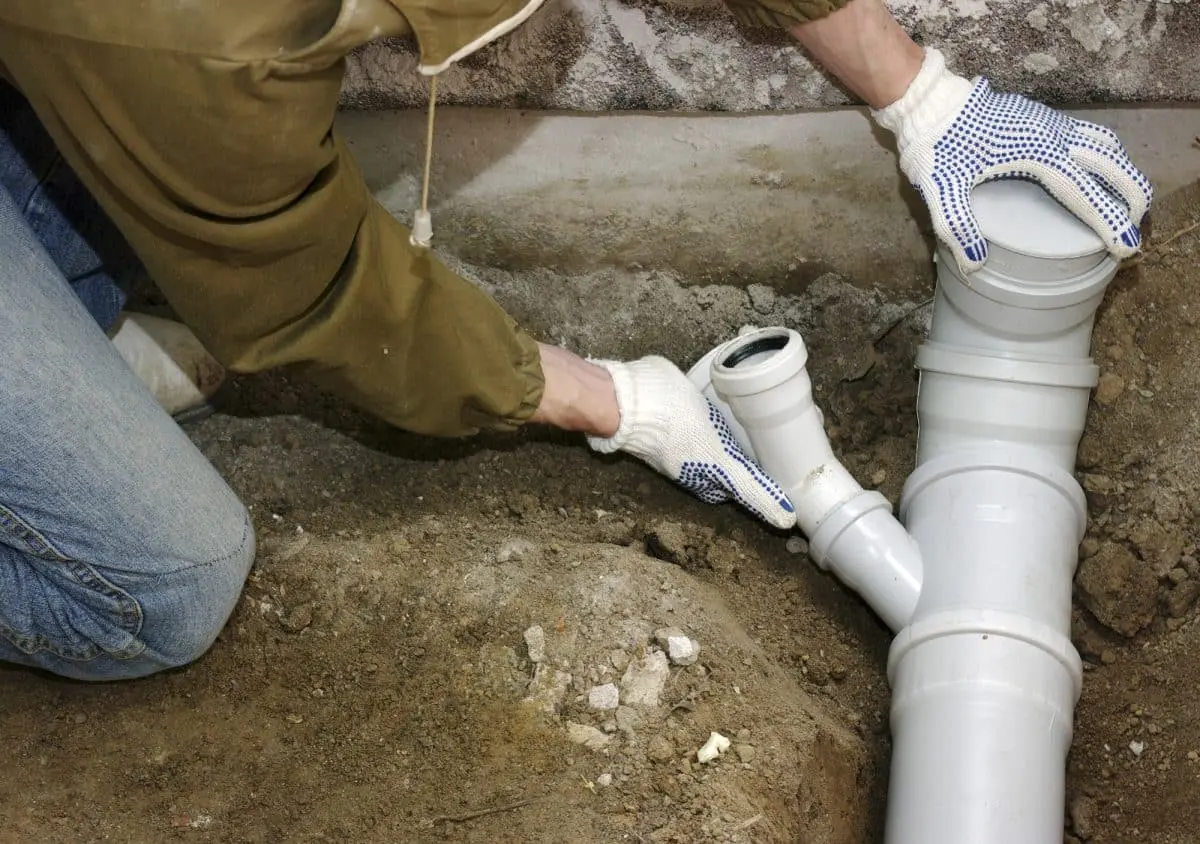
Kitchen drains are not always easy to reach. In many homes and flats, the pipework runs through tight cabinets, awkward corners, or shared sections of the building.
A professional approach starts with safe access to the correct point in the system. That may involve checking:
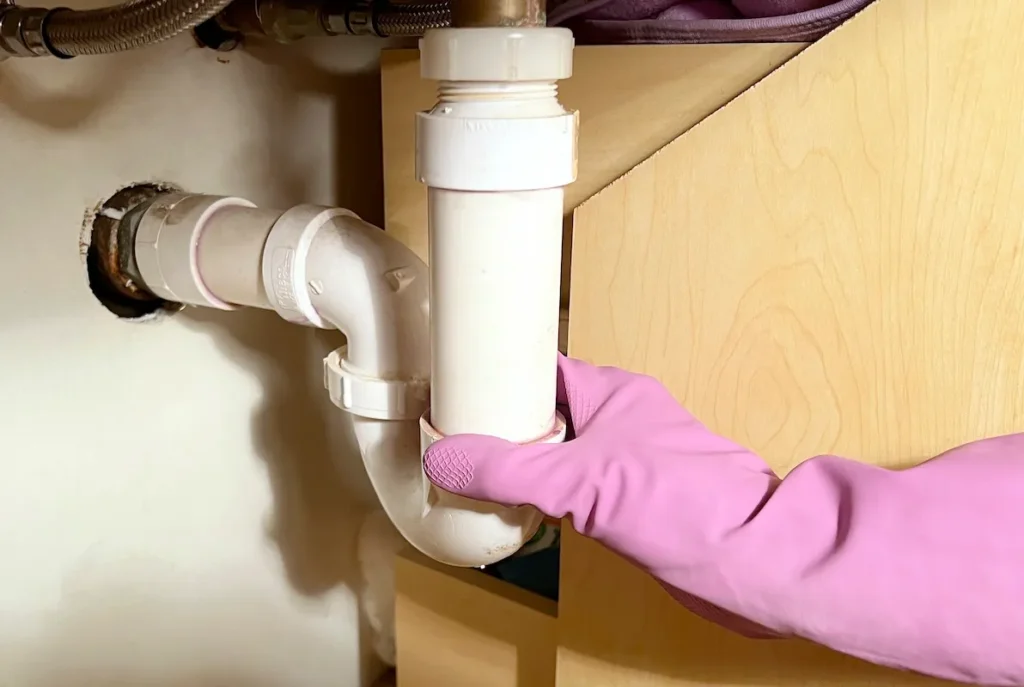
- the sink trap
- the waste pipe under the cabinet
- the branch line behind the unit
- a more suitable downstream access point if needed
This matters because the safest method depends on where the blockage sits and how the drain line is built.
Choosing the Right Method for the Pipe and the Blockage
There is no single tool that suits every blocked kitchen drain. The correct method depends on four things:
- pipe material and condition
- type of blockage
- depth of the blockage
- whether the issue is recurring
A technician will choose the least aggressive method that can clear the line properly.
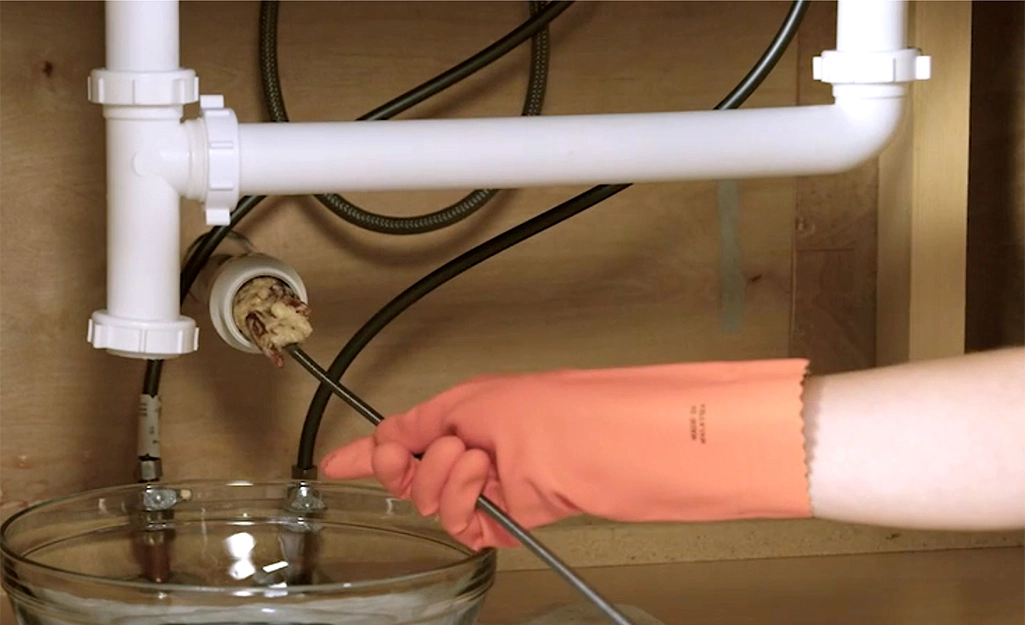
Mechanical Clearing for Localised Blockages
Some kitchen drain blockages are compact and local. In those cases, a mechanical tool may be enough to break up or extract the obstruction safely.
This is often suitable when the blockage is:
- close to the sink
- caused by trapped debris
- limited to a short section of pipe
High-Pressure Jetting for Grease and Internal Residue
When the inside of the pipe is coated with grease, sludge, or residue, simply punching a hole through the blockage is not enough. Water may flow again for a while, but the pipe wall remains dirty and catches new material quickly.
That is where high-pressure jetting is often the better option. It helps clean buildup from the inside of the pipe and is especially useful for recurring kitchen drain problems caused by grease or heavy residue.
Camera Inspection for Recurring or Unclear Problems
If the cause is unclear, the blockage keeps returning, or the technician suspects a deeper issue, camera inspection may be the next step.
A drain camera allows the technician to see inside the pipe and confirm whether the real cause is:
- heavy internal buildup
- a poorly draining section
- trapped debris farther down the line
- a defect or damage point in the pipe
This is often the smartest move when the same kitchen drain blocks repeatedly.
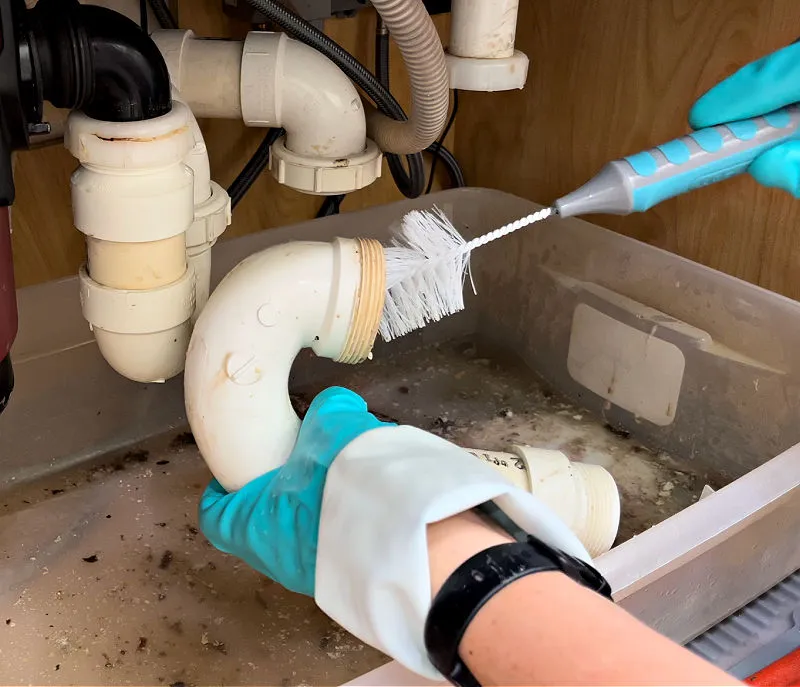
Controlled Cleaning Instead of Blind Force
Professional kitchen drain unblocking is about control, not brute force.
Too much force in the wrong pipe can damage joints or pipe walls. Too little cleaning can leave enough residue behind for the blockage to come back quickly. Safe clearing depends on matching the pressure, tool, and technique to the pipe condition.
That is one reason professionals often avoid harsh chemical drain cleaners. Chemicals may not remove the full buildup along the pipe wall, and they can create unnecessary risk when physical cleaning is still needed.
Flow Testing After the Blockage Is Cleared
The job is not finished when water starts moving again. A proper professional check includes flow testing.
After clearing the blockage, the technician will usually confirm that:
- water drains at normal speed
- the sink empties without backing up
- the line handles repeated flow properly
- there are no immediate signs of residual restriction
This matters because a partially cleared kitchen drain can appear fixed at first, then start causing problems again under normal daily use.
If the blockage has happened more than once, the technician may recommend deeper cleaning or inspection rather than treating it as a one-off problem.
Why Professional Kitchen Drain Unblocking Reduces Repeat Problems
Many recurring kitchen drain issues happen because the previous fix only opened a narrow path through the middle of the blockage.
That is not the same as cleaning the line.
If grease and residue remain stuck to the pipe wall, the drain may seem fine for a short time, but the buildup catches new waste and the restriction returns. Professional kitchen drain unblocking is more effective because it aims to restore a cleaner internal flow path, not just create temporary movement.
That is especially important in properties where the sink is used heavily, where grease buildup happens quickly, or where the same blockage has already come back once or twice.
When to Request Professional Kitchen Drain Unblocking
You should stop experimenting and request professional help when:
- the kitchen sink drains very slowly or backs up fully
- bad odours keep coming from the drain
- the blockage returns after a short period
- the dishwasher also backs up into the sink
- multiple drains in the property seem affected
- you suspect the issue is deeper than the trap
In those cases, a proper drain unblocking service is usually faster, cleaner, and more reliable than repeating the same DIY steps.
DrainResQ provides professional kitchen drain unblocking in Brussels and nearby areas, using safe methods and modern equipment. If the issue looks like heavy grease buildup,high-pressure jetting may be the right solution. If the blockage keeps returning,camera inspection is often the best way to identify the real cause.
Why DIY Fixes Often Fail
DIY methods can help with light buildup, but they often fail for one simple reason: they treat the symptom, not the full blockage.
A plunger may create temporary movement. Hot water may soften light grease. But neither method shows you what is happening deeper in the line, and neither guarantees that the pipe wall is actually clean.
That is why some kitchen drains seem fixed, then block again a few days later.
Professional equipment gives better control, better visibility, and a more reliable result.
Why Kitchen Drains Get Clogged in Vilvoorde & Brussels
Kitchen drains handle more than just water. Grease, food scraps, soap residue, and small foreign objects all pass through your pipes daily. Over time, these materials build up along the pipe walls and restrict water flow.
In many homes around Vilvoorde and Brussels, older plumbing systems make the problem worse. Narrow or aging pipes allow buildup to form faster, while hard water contributes to mineral deposits that harden inside the drain.
At DrainResQ, we often see cases where simple grease accumulation turns into a stubborn blockage deep within the system. These issues are often linked to a combination of everyday habits and hidden factors, such as improper waste disposal, grease buildup, and pipe condition—some of the most common kitchen sink drain blockage causes.
Understanding these causes early makes it easier to prevent serious blockages and avoid recurring drainage problems.
Safe DIY Methods to Unclog a Kitchen Drain
For minor clogs, there are safe methods you can try before calling a professional.
Flushing the drain with hot water can help dissolve grease buildup. However, the water should be hot—not boiling—to avoid damaging PVC pipes.
A natural and effective solution is the baking soda and vinegar method. Pour baking soda into the drain, add vinegar, let it react for 10–15 minutes, then rinse with hot water. This helps break down organic buildup safely.
Salt combined with hot water can also help scrub the inside of pipes. For clogs near the sink, a plunger can create pressure to dislodge the blockage.
At DrainResQ, we always recommend these methods for minor issues—but only when used correctly and safely.
What NOT to Do When Unclogging a Drain
Many DIY approaches can actually make the problem worse.
Chemical drain cleaners are a common mistake. While they may seem effective, they can corrode pipes and create long-term damage. Mixing different chemicals is especially dangerous.
Pouring boiling water directly into PVC pipes can weaken or deform them. Using sharp tools or metal objects to remove a clog can scratch or puncture the pipe interior.
We frequently repair damage caused by these methods at DrainResQ, which is why safe techniques are always recommended.
Need Kitchen Drain Unblocking in Vilvoorde or Brussels?
A blocked kitchen drain is rarely just a one-time inconvenience. In most cases, it is the result of gradual buildup inside the pipe—grease, residue, and debris that continue to restrict flow until the problem becomes unavoidable. While temporary fixes may restore drainage for a short time, they often fail to address the root cause.
A proper solution focuses on fully clearing and cleaning the pipe, not just creating a small opening for water to pass through. This is what reduces the risk of recurring blockages and keeps your kitchen functioning as it should.
If your drain is already showing signs of trouble—slow flow, bad odours, or repeated clogs—it is usually more effective to act early rather than wait for a complete blockage. Professional inspection and cleaning can identify the exact issue, prevent further damage, and restore long-term performance.
For homeowners and businesses in Vilvoorde and Brussels, you can contact DrainResQ for professional kitchen drain unblocking. This helps ensure the problem is fixed safely, properly, and with long-lasting results.