
A blocked kitchen sink is one of the most common drain problems in Brussels. It usually starts with slow drainage, bad smells, or dishwasher water backing up into the sink. Leave it too long, and a minor blockage becomes a bigger job.
Most kitchen sink blockages are caused by buildup, not bad luck. Grease sticks to the inside of the pipe, food waste catches on it, and coffee grounds or soap residue make the problem worse. In Brussels, older drainage infrastructure is also part of the picture: VIVAQUA manages the sewer network in the capital, and it says parts of that network are more than a century old.
That does not mean every blocked sink is caused by the public network, but it does mean older pipework and aging drainage conditions are common across the region.
If your sink is blocked right now and basic DIY methods have already failed, go straight to DrainResQ’s drain unblocking service or contact us. If the problem keeps coming back, camera inspection is usually the smarter next step.
What Usually Causes a Kitchen Sink Blockage?
A kitchen sink blockage is usually caused by a buildup of everyday waste inside the pipes over time. The main causes are predictable.
Grease, Fat, and Oil
Grease is the biggest offender in kitchen drains. It goes down the sink as a liquid, cools inside the pipe, and leaves a sticky layer behind. That layer catches food debris and narrows the pipe.
Common causes include:
- cooking oil
- butter and margarine
- meat fat
- creamy sauces
- greasy pan residue
Food Waste
Food scraps should not be rinsed into the sink, especially without a strainer. The worst offenders are the ones that swell, clump, or turn sticky in water.
These are common problem items:
- rice
- pasta
- bread
- vegetable peels
- eggshell fragments
- starchy leftovers
In Brussels, food and kitchen waste belongs in the orange bag collection system run by Bruxelles-Propreté, not down the drain.
Coffee Grounds
Coffee grounds are small, but they are not harmless. They do not dissolve, they settle quickly, and they mix with grease to form sludge.
Soap Residue and Mineral Deposits
Soap residue and mineral buildup can roughen the inside of the pipe. Once that surface gets rougher, grease and food waste stick more easily.
Wipes and Other Wrongly Disposed Waste
Wipes are more of a toilet and sewer issue than a sink issue, but they matter because many households mix bad drain habits. Flemish water-sector guidance is explicit: wipes do not belong in the sewer, and campaigns from AquaFlanders and VLARIO also say frying oil and food waste should stay out of drains and toilets.
Practical Decision Guide
| Situation | Best Next Step |
| Water draining slowly | Try hot water, plunging, or P-trap cleaning |
| Bad smell from the drain | Clean the trap and flush the line |
| Sink fully blocked | Check the trap, then stop if it does not clear |
| Dishwasher backs up into sink | Stop using water and book service |
| Multiple drains are slow | Treat it as a deeper drainage issue |
| Recurring blockage | Book camera inspection |
Early Signs Your Kitchen Sink Is Starting to Block
A full blockage rarely appears without warning.
Slow Drainage
This is usually the first sign. Water sits in the sink longer than normal and drains away slowly.
Gurgling Sounds
If you hear bubbling or gurgling after the water drains, airflow inside the pipe is being disrupted. That often means water is squeezing past partial buildup.
Bad Smells
A sour or rotten smell usually means food residue, grease, or sludge is trapped in the pipe or P-trap.
Water Backing Up Into the Sink
This is more serious. You may notice:
- standing water in the basin
- dishwasher discharge coming back into the sink
- water returning after it seems to drain
At that point, DIY may still work, but the odds are worse.
Safe DIY Fixes You Can Try First
Start with the safest methods. Do not jump straight to corrosive drain chemicals.
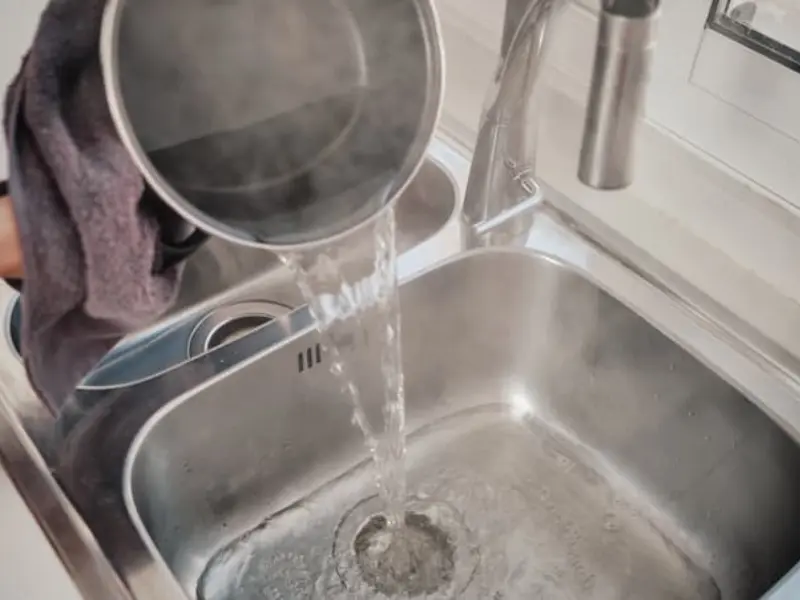
1. Hot Water and Washing-Up Liquid
For light grease buildup, this is the safest first step.
- Run very hot water.
- Add a little washing-up liquid.
- Flush the drain slowly in stages.
- Test the flow.
Do not use extreme heat recklessly on questionable plastic pipework.
2. Baking Soda and Vinegar
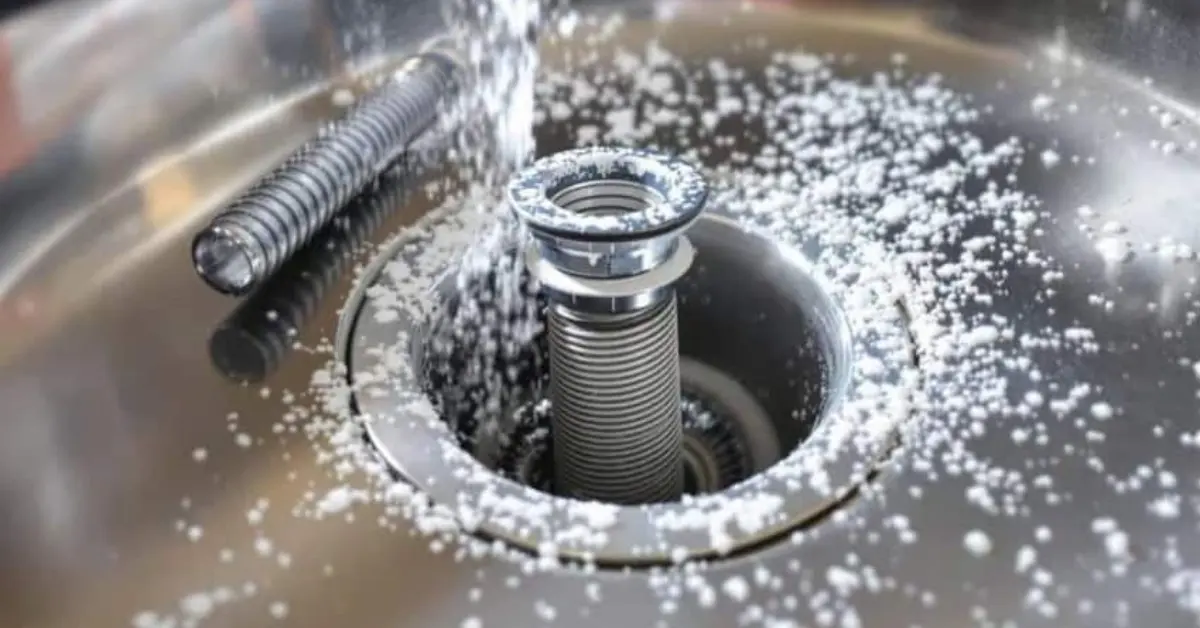
This can help with light residue and odours.
- Add around 100 g of baking soda.
- Add around 100 ml of white vinegar.
- Cover the drain.
- Wait 10 to 15 minutes.
- Flush with hot water.
This is for minor buildup, not a severe blockage.
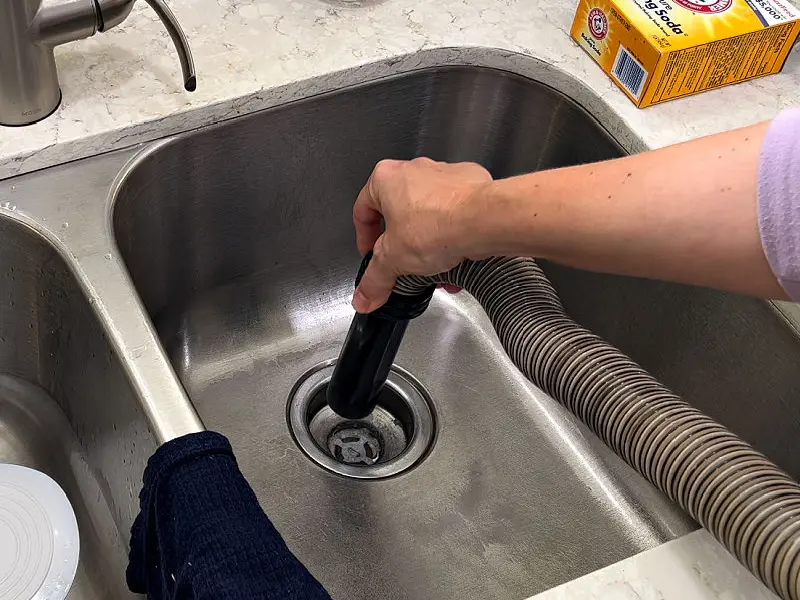
3. Proper Plunging
A sink plunger works best on blockages close to the drain opening.
- keep a tight seal
- block the overflow opening if needed
- plunge steadily, not wildly
- test and repeat
4. Clean the P-Trap
The P-trap is one of the most common places for kitchen blockages.
- Put a bucket underneath.
- Unscrew the trap carefully.
- Remove grease, sludge, and trapped debris.
- Rinse and reinstall.
- Test for leaks.
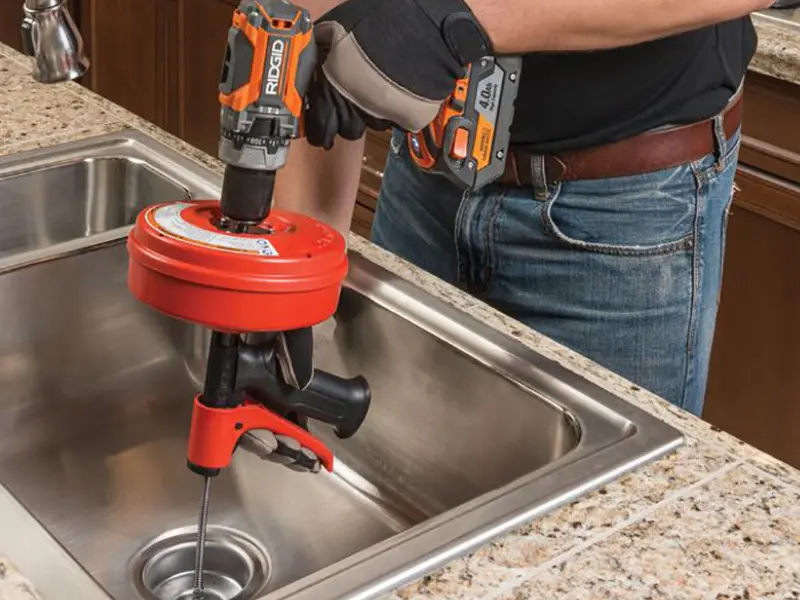
5. Use a Hand Snake Carefully
A hand auger can help if the blockage is slightly deeper in the branch line. If you hit strong resistance, stop forcing it.
What Not to Do
Do not make the job worse.
Do Not Use Harsh Chemical Drain Cleaners
They can damage seals, create fumes, and make later work more difficult. The US EPA also advises people with septic systems to avoid chemical drain openers and to keep cooking oil and grease out of drains. Even if your property is not on septic, that is still sensible plumbing advice.
Do Not Keep Repeating Failed DIY Methods
If hot water, plunging, and trap cleaning have already failed, doing the same thing again is not a strategy.
Do Not Use Improvised Metal Tools
Wire hangers and random metal tools can scratch pipes, get stuck, or compact the blockage further.
When to Call DrainResQ
Call a professional when the problem stops being simple.
DrainResQ states on its site that it provides drain unblocking, high-pressure jetting, camera inspection, and 24/7 emergency support in Brussels and surrounding areas, with more than 10 years of hands-on experience.
You should stop DIY and call if:
- the sink keeps blocking again
- the dishwasher also backs up
- multiple drains are slow
- bad smells keep returning
- the blockage feels deeper than the trap
- water is rising fast
- the issue comes back every few weeks
For recurring blockages, link users directly to camera inspection. For heavy grease or sludge deeper in the line, send them to high-pressure jetting. For immediate help, use Contact Us.
What a Professional Will Usually Check
A proper drain specialist does more than force water through a clogged line.
A technician will usually:
- confirm whether the blockage is local or deeper in the system
- inspect the trap and nearby branch pipe
- look for grease, compacted food waste, or a foreign object
- test flow after clearing the blockage
- recommend camera inspection if the problem keeps returning
That matters because a temporary clear is not the same as solving the underlying issue.
How to Prevent Kitchen Sink Blockages
Most kitchen sink blockages are avoidable.
Daily Habits
- never pour grease into the sink
- wipe greasy pans before washing them
- use a sink strainer
- throw coffee grounds in the bin
- keep rice, pasta, bread, and peelings out of the drain
Smarter Disposal
Bruxelles-Propreté says food and kitchen waste should go into the orange bag system. AquaFlanders and VLARIO guidance also says wipes and frying oil do not belong in drains or toilets. Link out once here and leave it at that.
Act Early
If the sink has only just started draining slowly, deal with it then. That is the point where simple cleaning still has a chance.
FAQ
Q: Are chemical drain cleaners safe for my pipes?
A: Most professionals advise against them. They generate heat and use corrosive acids that can weaken older metal pipes or melt the seals on modern PVC plumbing.
Q: Can I use a wire coat hanger to unblock a sink?
A: While it can reach shallow clogs, there is a high risk of scratching the interior of your pipes or getting the wire stuck, which makes the professional repair more expensive.
Q: Why does my sink smell even when it isn’t blocked?
A: This is often caused by a “dry trap.” If the sink hasn’t been used in a while, the water seal in the P-trap evaporates, allowing sewer gases to enter the home. Simply running the water for 30 seconds usually fixes this.
Q: How often should I have my drains professionally cleaned?
A: For most households in Vilvoorde, a professional inspection every 2–3 years is sufficient to prevent major emergencies.
Keep Drains Flowing
A blocked kitchen sink is common, but it is not something to ignore. In most cases, it builds up slowly from grease, food waste, and daily habits. If you catch it early, simple fixes can still work. If it keeps coming back or gets worse, it usually means the problem is deeper. At that point, it is better to stop guessing and get it checked properly. If you need help, reach out to DrainResQ and get the issue sorted before it turns into a bigger repair.